
More than 100 Organizations Call on Congress to Protect the National Eye Institute and Strengthen Vision Research Funding
Broad Coalition Urges Congress to Maintain NEI Independence, Reject Harmful Research Policies, and Provide $1 Billion for Vision Research
FOR IMMEDIATE RELEASE
Washington, D.C. — Alliance for Vision Research today announced that more than 100 organizations representing patients, researchers, clinicians, academic institutions, professional societies, vision advocates, and industry partners have joined together in a unified call for Congress to prioritize vision and vision research in the Fiscal Year 2027 appropriations process.
In a sign-on letter sent to House and Senate appropriations leaders, the coalition urged Congress to maintain the National Eye Institute (NEI) as an independent institute within the National Institutes of Health (NIH), provide $1 billion in funding for NEI, reject harmful policies that threaten scientific discovery, and preserve the research ecosystem responsible for decades of transformative breakthroughs in vision science.
“At a time when vision research is facing unprecedented challenges, this extraordinary coalition demonstrates the strength, unity, and commitment of the vision community,” said Dan Ignaszewski, Executive Director of Alliance for Vision Research. “More than 100 organizations have come together with one clear message: vision research is a national priority, the National Eye Institute must remain independent, and continued investment in scientific discovery is essential for patients, families, and America’s future.”
The letter highlights the growing burden of vision loss and eye disease in the United States. Nearly 100 million Americans are affected by vision impairment or eye disease, resulting in an estimated $200 billion annually in direct and societal costs. Vision loss is associated with reduced independence, increased risk of injury and falls, diminished quality of life, and broader health complications.
The coalition emphasized that vision research remains one of the most innovative and translationally successful areas within NIH. Investments through the National Eye Institute have led to groundbreaking advances that extend far beyond ophthalmology, including:
- The first FDA-approved gene therapy for an inherited disease
- The first FDA-approved autonomous artificial intelligence diagnostic system for diabetic retinopathy
- Transformative advances in stem cell science and regenerative medicine
- Development of optical coherence tomography (OCT), one of the most widely utilized imaging technologies in medicine
- Leadership in artificial intelligence, big data, and emerging fields such as oculomics, where the eye serves as a window into systemic health and disease
The coalition also raised concerns regarding proposals that could weaken the nation’s research enterprise, including efforts to consolidate the National Eye Institute into a broader institute, implement universal forward funding policies that could reduce new grant opportunities, and impose arbitrary caps on indirect research costs.
According to the letter, preserving the National Eye Institute’s independence is critical to ensuring continued scientific focus, specialized expertise, dedicated peer review, and sustained progress toward treatments and cures for blinding and vision-threatening diseases.
“Vision research does far more than improve eye health,” Ignaszewski said. “It drives innovation across genetics, artificial intelligence, imaging, neuroscience, aging, diabetes, regenerative medicine, and precision health. Protecting the National Eye Institute and strengthening federal support for vision research is an investment in the health, independence, productivity, and quality of life of millions of Americans.”
The coalition’s recommendations to Congress include:
- Maintaining the National Eye Institute as an independent institute within NIH
- Recognizing vision and vision research as national public health and biomedical research priorities
- Providing $1 billion in FY27 funding for the National Eye Institute
- Rejecting universal forward funding proposals that would reduce new grant opportunities
- Rejecting arbitrary indirect cost caps and pursuing thoughtful bipartisan reforms
- Continuing strong bipartisan support for NIH and the broader biomedical research enterprise
The sign-on letter represents one of the largest and most diverse vision research advocacy efforts in recent years and reflects broad consensus across the vision community regarding the importance of protecting scientific discovery, supporting patients, and maintaining America’s global leadership in biomedical innovation.
Contact:
Judy Hill
Chief Communications & Public Affairs Officer
Alliance for Vision Research
judy@eyeresearch.org
240-351-3413
About Alliance for Vision Research
Alliance for Vision Research is the nation’s leading advocacy organization dedicated to advancing vision research, promoting vision health, and ensuring strong federal support for the scientific discoveries that prevent blindness, restore sight, and improve quality of life. Alliance for Vision Research works with Congress, federal agencies, researchers, clinicians, patients, industry, and advocacy organizations to elevate vision as a national public health and research priority.
Related News & Events
Legislative Update – September 2026
The Continuing Resolution Keeps Government Open Through December 11 President Trump signed the Continuing Appropriations and Extensions Act, 2027, into law on September 2. The continuing resolution (CR) keeps federal agencies operating through December 11, 2026, generally at current funding levels. It prevents an October 1 shutdown and gives Congress more time to negotiate full-year … Continued

Executive Director Update – September 2026
Over the past year, the vision research community has helped prevent some of the most damaging outcomes facing federal research. NEI remains an independent Institute. NIH funding has been largely preserved. The Department of Defense Vision Research Program (VRP) was restored. And, most recently, Congress delayed a sweeping OMB proposal that would fundamentally change how … Continued
Alliance for Vision Research Joins VHAC Stakeholder Meeting
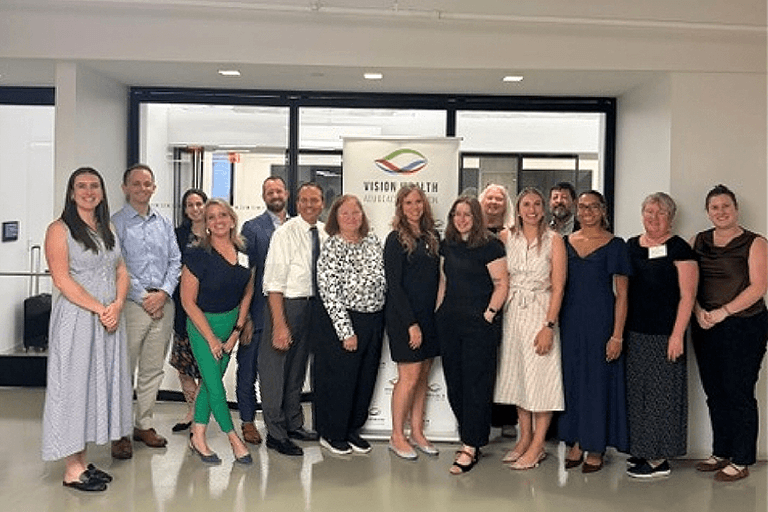
The Alliance for Vision Research joined fellow members of the Vision Health Advocacy Coalition (VHAC) this week for its Stakeholder Meeting, bringing together leaders from across the vision community to discuss shared advocacy priorities, challenges affecting access to care, and opportunities for greater collaboration in 2027. VHAC, a coalition of the Alliance for Patient Access, … Continued