
Legislative Update – August 2026
Congress Pushes Back on Major Changes to Federal Research Grantmaking
As Congress continues work on fiscal year 2027 funding, lawmakers are increasingly focused not only on how much the federal government invests in biomedical research, but also on how those research dollars are awarded, administered, and sustained.
Over the past several months, proposals affecting scientific peer review, indirect costs, multiyear grant funding, and federal oversight of research awards have created significant uncertainty across the research community. Alliance for Vision Research has been actively engaging Congress, the Administration, and partners across the biomedical research community to ensure that reforms strengthen accountability without undermining independent science or reducing opportunities for researchers.
Alliance for Vision Research Responds to Sweeping OMB Grant Proposal
In July, Alliance for Vision Research submitted formal comments to the Office of Management and Budget urging OMB to withdraw or substantially revise its proposed changes to the Uniform Guidance, the government-wide framework governing federal grants and other financial assistance.
The proposal would make significant changes throughout the federal grant lifecycle, including expanding review of awards by senior political appointees after scientific merit review, making peer-review recommendations advisory rather than determinative, broadening the government’s authority to terminate grants, and establishing new requirements affecting subawards, publications, conferences, research dissemination, and compliance.
Our comments emphasized that scientific merit and independent peer review must remain the foundation of federal research funding decisions. We also raised concerns that additional political and administrative review could delay awards, increase uncertainty for researchers and institutions, weaken scientific collaboration, and discourage early-career investigators from pursuing careers in biomedical research.
We support transparency, accountability, and responsible stewardship of federal research funding, but reforms must preserve the principles that have made the United States the global leader in biomedical research: independent scientific review, specialized expertise, collaboration, predictable grant administration, and sustained investment in discovery.
The response has not been limited to the research community. Senate Appropriations Committee Chair Susan Collins (R-ME) raised many of the same concerns directly with OMB, warning that provisions allowing expanded termination authority and senior-appointee review could undermine biomedical research and conflict with Congress’ constitutional role in determining how federal funds are spent.
Senate Moves to Temporarily Block Implementation of OMB Proposal
Congress has now taken an additional step on the OMB proposal. The Senate-passed Continuing Appropriations Act for FY2027 includes language preventing OMB from implementing its proposed Uniform Guidance rule during the period covered by the continuing resolution.
While temporary, the provision is an important indication that Congress intends to play an active role in determining whether, and how, these sweeping changes to federal grantmaking move forward.
Alliance for Vision Research will continue working with congressional offices and national partners to seek protections in any final FY27 appropriations legislation or subsequent continuing resolution. Our goal is not simply to delay implementation, but to ensure that any eventual changes preserve independent peer review, transparent and objective decision-making, reasonable appeal protections, scientific collaboration, and predictability throughout the grant lifecycle.
Congress Continues to Protect Negotiated Indirect Cost Rates
Congress is also continuing to push back against unilateral changes to facilities and administrative, or indirect, cost reimbursement.
The House FY27 Labor-HHS appropriations legislation maintains language preventing NIH from using appropriated funds to develop or implement policies that alter how negotiated indirect-cost rates are applied. This continues Congress’ rejection of efforts to impose a universal indirect-cost cap and preserves the longstanding negotiated-rate framework while broader discussions about potential reforms continue.
Similar protections have appeared across other appropriations bills, reflecting a broader congressional position that significant changes to federal research infrastructure costs should not be imposed administratively without congressional involvement. The debate over indirect costs is likely to continue, including discussion of approaches intended to increase transparency and accountability, but Congress has thus far consistently resisted abrupt changes that could destabilize universities, medical centers, nonprofit research institutions, and other recipients of federal research funding.
Forward Funding Remains a Significant Concern
Another major issue is NIH’s expanded use of forward funding, under which several years of a multiyear grant are obligated upfront rather than funded each year incrementally.
As we reported last month, Alliance and partners are concerned that rapidly expanding this approach could significantly reduce the amount of funding available for new and competing research awards in any given fiscal year. The Administration’s FY27 budget proposal goes further and seeks to forward fund all competing Research Project Grant awards.
This concern has become increasingly important as NIH award activity continues to lag historical levels. Alliance has urged Congress to preserve flexibility for appropriate uses of multiyear funding while preventing a wholesale shift away from NIH’s traditional grantmaking model.
The FY26 appropriations agreement established limits on NIH’s use of forward funding and required additional reporting to Congress regarding grant announcements, awards, continuations, cancellations, terminations, and multiyear funding. For FY27, Alliance continues to support stronger protections that ensure NIH can fund the greatest possible number of scientifically meritorious new and competing applications.
Notably, the House FY27 proposal removed some of the more specific FY26 parameters governing NIH’s use of forward funding, making this an important issue to resolve as House and Senate negotiations continue.
A Broader Debate Over the Future of Federal Research Funding
Taken together, these developments represent a broader policy debate that extends well beyond annual NIH and NEI funding levels.
Congress is increasingly confronting fundamental questions about who makes federal research funding decisions, how scientific merit is evaluated, whether grant commitments should be funded incrementally or upfront, how research infrastructure is supported, and what protections should exist once an award has been made.
We will continue advocating for policies that protect and support vision research and the NEI and will work with our partners to protect independent peer review, preserve negotiated research infrastructure support, maximize opportunities for new scientific discoveries, and ensure that federal research funding remains predictable enough for researchers, institutions, patients, and industry partners to make the long-term commitments that biomedical innovation requires.
As Congress works toward final FY27 funding legislation this fall, these grantmaking policies will remain among the Alliance’s highest advocacy priorities.
Related News & Events
Legislative Update – September 2026
The Continuing Resolution Keeps Government Open Through December 11 President Trump signed the Continuing Appropriations and Extensions Act, 2027, into law on September 2. The continuing resolution (CR) keeps federal agencies operating through December 11, 2026, generally at current funding levels. It prevents an October 1 shutdown and gives Congress more time to negotiate full-year … Continued

Executive Director Update – September 2026
Over the past year, the vision research community has helped prevent some of the most damaging outcomes facing federal research. NEI remains an independent Institute. NIH funding has been largely preserved. The Department of Defense Vision Research Program (VRP) was restored. And, most recently, Congress delayed a sweeping OMB proposal that would fundamentally change how … Continued
Alliance for Vision Research Joins VHAC Stakeholder Meeting
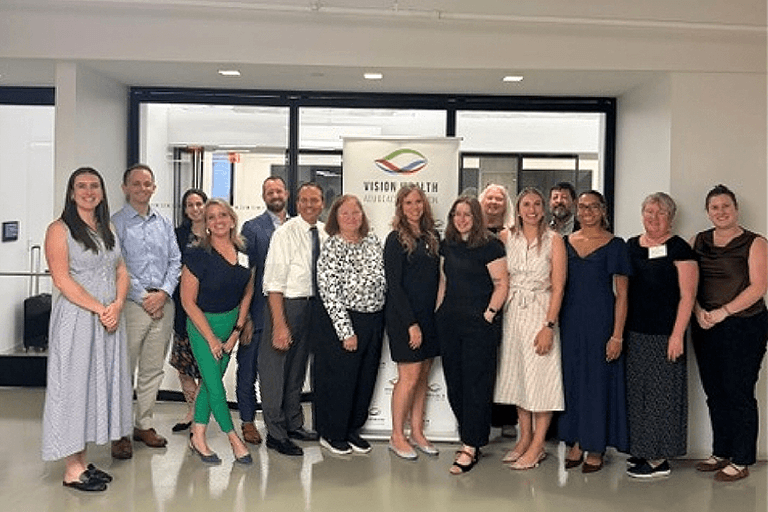
The Alliance for Vision Research joined fellow members of the Vision Health Advocacy Coalition (VHAC) this week for its Stakeholder Meeting, bringing together leaders from across the vision community to discuss shared advocacy priorities, challenges affecting access to care, and opportunities for greater collaboration in 2027. VHAC, a coalition of the Alliance for Patient Access, … Continued