
Emerging Vision Scientists Bring Research and Advocacy to Capitol Hill
More than 40 early-career vision researchers came to Washington, D.C., this September for the 2026 Emerging Vision Scientist Program, bringing their science out of the laboratory and directly to policymakers to demonstrate why continued investment in vision research matters.
The September 15–16 program was the largest in its history, bringing together 40 Emerging Vision Scientists from institutions across the country for two days of science, advocacy, professional development, and engagement on Capitol Hill.
For Alliance for Vision Research, the program represents an investment not only in the future of vision science, but also in the next generation of advocates who can communicate the value of research to policymakers, patients, and the public.
Preparing Scientists to Become Advocates
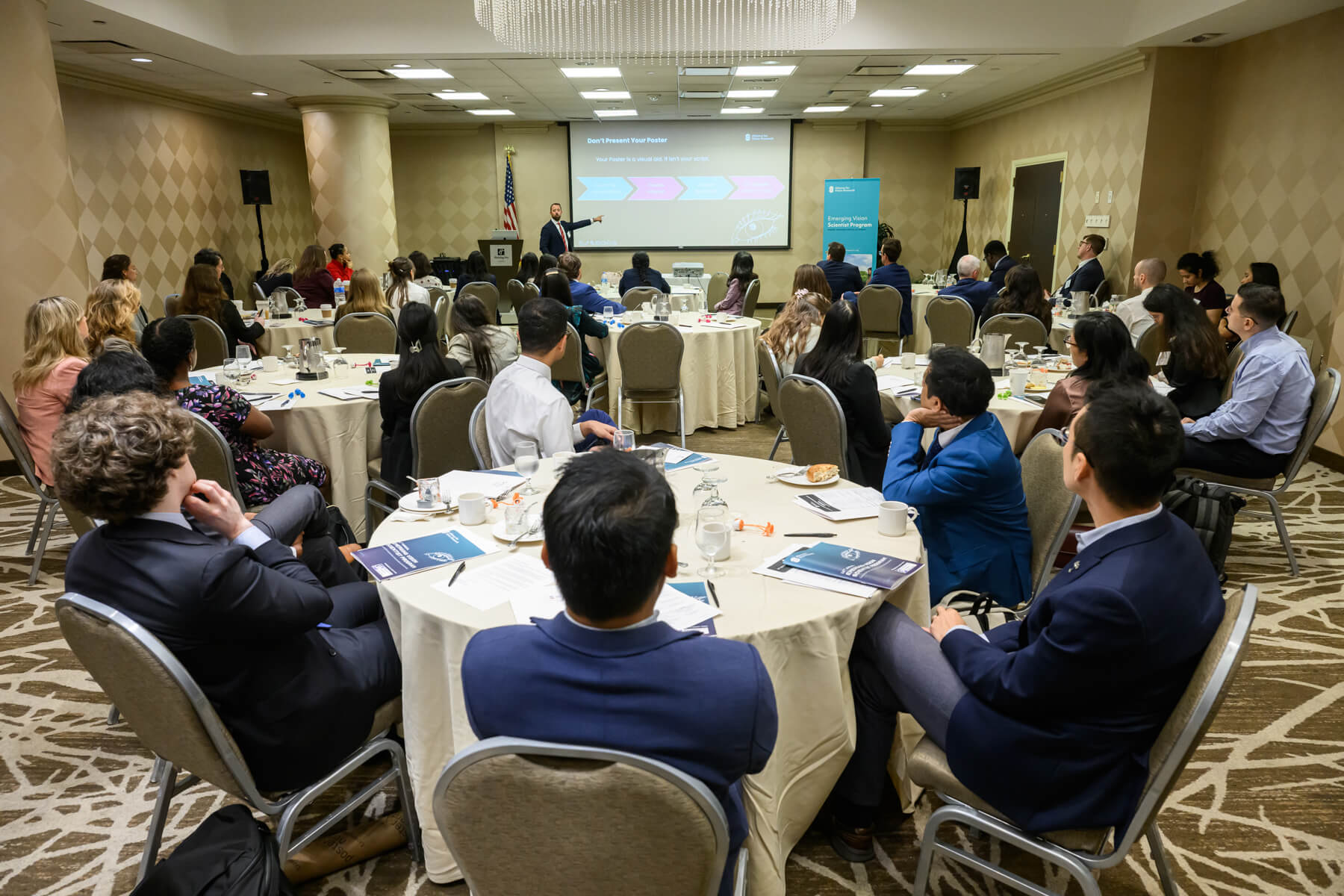
Before arriving in Washington, participants took part in advocacy training designed to help them understand the federal legislative and appropriations process, communicate their research to non-scientific audiences, and prepare for meetings with congressional offices.
That preparation came to life in Washington as researchers translated complex science into something every policymaker could understand: why their work matters to patients and why sustained federal investment is essential to moving discoveries forward.
Participants advocated for strong funding for the National Institutes of Health (NIH) and National Eye Institute (NEI), continued independence of NEI, a strong Department of Defense Vision Research Program, greater stability in federal research funding, and policies that protect scientific peer review and the research enterprise.
Bringing Vision Science to Capitol Hill
The program opened September 15 with a poster reception on Capitol Hill, giving congressional staff, vision community leaders, researchers, and partners an opportunity to meet the Emerging Vision Scientists and learn directly about their work.
The posters showcased the extraordinary breadth of today’s vision research, while challenging participants to communicate highly technical science in clear, accessible terms.
The following day, Emerging Vision Scientists headed to congressional offices for meetings with lawmakers and staff. They shared their research, explained the impact of federal investment in vision science, and discussed the policy decisions affecting researchers and patients.
These conversations put a face on federal research funding. Behind every NIH or NEI grant is a scientist pursuing a question that could lead to a better diagnostic tool, treatment, technology, or cure.
Congressional Briefing Explores the Growing Challenge of Myopia
The program coincided with Alliance for Vision Research’s Congressional Briefing on Myopia, providing another opportunity to bring vision science and public health directly to Capitol Hill.
The briefing featured Jeffrey Walline, OD, PhD, FAAO, Dean of The Ohio State University College of Optometry and President of the American Academy of Optometry, and Catherine “Cate” Jordan, MD, a pediatric ophthalmologist at Nationwide Children’s Hospital, Associate Professor at The Ohio State University, and Chair of the American Association for Pediatric Ophthalmology and Strabismus Myopia Task Force.
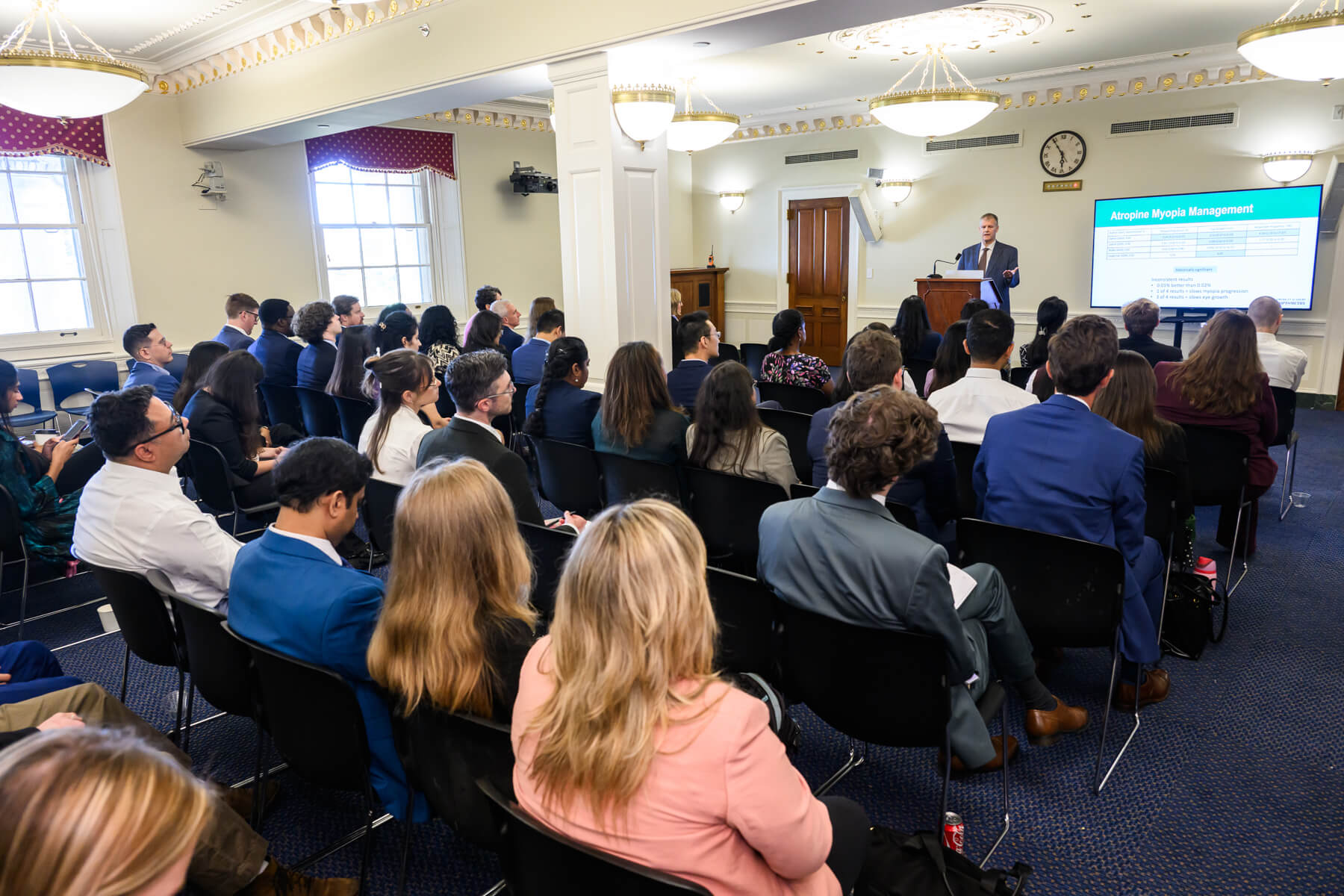
Together, they explored the growing prevalence of myopia, its potential long-term consequences for eye health, and the importance of research, early intervention, and greater awareness.
The briefing reinforced one of the central messages of the Emerging Vision Scientist Program: research does not exist in isolation. Scientific discovery, federal policy, clinical care, patient outcomes, and public awareness are interconnected.
Watch the Myopia Congressional Briefing Replay
More Than a Two-Day Program
The impact of the Emerging Vision Scientist Program extends far beyond Washington.
Participants leave with a stronger understanding of how federal policy affects their work, greater confidence communicating science outside the laboratory, new relationships across the vision community, and firsthand experience advocating for research.
The response from this year’s participants underscored that impact. In our post-program survey, every respondent gave the overall program the highest possible rating. Participants also offered ideas for making future programs even stronger, including additional Hill meeting practice, peer feedback on science communication, poster preparation, deeper policy education, and greater engagement with program alumni.
Those lessons will help us continue growing a program that has become an important part of Alliance for Vision Research’s work to build the future of vision research advocacy.
Investing in the People Behind the Science
Research to Prevent Blindness has been a longstanding supporter of the Emerging Vision Scientist Program, helping make it possible to bring promising scientists to Washington and give them the tools and experience to become effective advocates for research.
The program also reflects the strength of the broader vision community. Researchers, mentors, sponsors, partner organizations, congressional offices, and advocates all play a role in creating an experience that connects emerging scientists with the policy decisions shaping their careers and their science.
For us, that connection does not end when participants leave Washington.
When someone becomes part of the Emerging Vision Scientist Program, we become part of their vision research journey, and they become part of ours. Once an Emerging Vision Scientist, they remain part of a growing community committed to advancing science and ensuring policymakers understand what is at stake.
The research these scientists are conducting today could shape how we prevent, diagnose, and treat vision loss tomorrow. By giving them the opportunity to bring that science directly to Capitol Hill, we are helping ensure the next generation of researchers also has the voice to advocate for the federal investment that makes discovery possible.
That is how we help Congress and the public #SeeWhatMatters.
Related News & Events
Legislative Update – October 2026
Federal Funding Uncertainty Continues as NIH Research Policy Proposals Draw Increased Scrutiny As Congress approaches the November 3 midterm elections and the December 11 expiration of the current continuing resolution (CR), significant uncertainty remains around FY27 funding and federal research policy. Although bipartisan congressional proposals earlier this year protected key biomedical research priorities, major decisions … Continued
Executive Director Update – October 2026
An Important Election and a Critical Stretch for Vision Research As we approach the final months of 2026, the Alliance for Vision Research is preparing for what promises to be a busy and consequential end to the year for federal research funding and policy. With the midterm elections just a week away and the current … Continued

Alliance for Vision Research Joins Nearly 400 Organizations Urging Congress to Finalize FY 2027 NIH Funding
Alliance for Vision Research has joined 393 other organizations in urging congressional leaders to move quickly to finalize robust FY 2027 funding for the National Institutes of Health (NIH). The October 22 letter, organized by the Ad Hoc Group for Medical Research, represents patients, scientists, health professionals, academic and research institutions, educators, industry, and other … Continued