
Legislative Update – October 2026
Federal Funding Uncertainty Continues as NIH Research Policy Proposals Draw Increased Scrutiny
As Congress approaches the November 3 midterm elections and the December 11 expiration of the current continuing resolution (CR), significant uncertainty remains around FY27 funding and federal research policy. Although bipartisan congressional proposals earlier this year protected key biomedical research priorities, major decisions remain on FY27 appropriations, NIH grantmaking, scientific peer review, and regulatory requirements.
Throughout October, Alliance for Vision Research has remained actively engaged, submitting formal comments on proposed NIH policies, working with research partners to assess impacts on the vision research community, and preparing responses to additional proposals affecting federally funded research.
FY27 Funding: Another Continuing Resolution Appears Increasingly Likely
The current CR, enacted September 2, maintains federal operations generally at FY26 levels through December 11. While avoiding a government shutdown, it leaves NIH, the National Eye Institute (NEI), and other federal research programs without full-year funding certainty.
NIH has confirmed that Institutes and Centers may issue noncompeting research grants below amounts previously indicated in Notices of Award while operating under the CR. Awards may be adjusted after final FY27 appropriations, but NIH has advised institutions to manage expenditures carefully in the meantime.
The November elections add further uncertainty. Potential changes in control of the House or Senate could affect congressional leadership, appropriations priorities, and FY27 negotiations. Both parties have historically supported biomedical research, although they differ on discretionary spending. Congressional Democrats have expressed interest in restoring larger annual NIH increases, while key Republican appropriators have supported protecting biomedical research funding and congressional oversight of NIH.
Combined with a compressed legislative calendar and competing year-end priorities, these factors make another short-term CR increasingly possible, potentially pushing final FY27 funding decisions into 2027 and the new Congress.
Alliance for Vision Research continues advocating for $51.3 billion for NIH, $1 billion for NEI, and at least $10 million for the Department of Defense Vision Research Program, along with sustained federal support for vision and eye-health activities.
OMB Federal Grants Proposal: Delayed, but Significant Concerns Remain
The current CR temporarily prohibits the Office of Management and Budget (OMB) from finalizing or implementing its proposed Regulation for Federal Financial Assistance, which would substantially revise the Uniform Guidance governing federal grants. Section 157 blocks the proposed rule, or a substantially similar regulation, through December 11, and NIH has confirmed it cannot implement the revisions during this period.
This bipartisan congressional action provides important but temporary protection. It does not withdraw the proposal, and OMB could regain authority to finalize it after the CR expires without further congressional or administrative action.
Alliance for Vision Research previously urged OMB to rescind the proposal because provisions could increase political and administrative involvement in decisions traditionally guided by scientific peer review and agency expertise; expand authority to suspend or terminate grants under broad or insufficiently defined criteria; create barriers to collaboration, subawards, conferences, publications, and dissemination of research findings; and create uncertainty that undermines ongoing projects and long-term research investment.
Additional concerns have emerged regarding the proposal’s legal foundation. Several provisions are tied up in federal court, with some blocked, while others may conflict with federal statutes governing research participation, workforce development, and clinical research.
Reports that agencies, including NIH, may pursue grantmaking changes through other administrative processes also demonstrate that delaying the OMB rule alone may not resolve every concern. Federal research awards should continue to reflect established scientific evaluation standards, statutory requirements, and the expertise of NIH and its Institutes and Centers.
Alliance for Vision Research will continue monitoring developments, engaging congressional and coalition partners, advocating for rescission or substantial revision of the proposal, and encouraging Congress to preserve current protections in future funding legislation.
Alliance Submits Comments Opposing Reduced Transparency in NIH Peer Review
In October, Alliance for Vision Research submitted comments on NIH’s Request for Information (NOT-OD-26-088) regarding proposed changes to how peer-review outcomes are reported.
The proposal would replace final overall impact scores and applicable percentile rankings with three classifications: Most Competitive, Competitive, and Not Discussed. NIH would continue calculating numerical scores internally, but they would no longer be disclosed to investigators, institutions, NIH program staff, or Advisory Councils.
While we recognize NIH’s goal of reducing excessive reliance on small numerical differences in funding decisions, greater flexibility should not come at the expense of transparency. Scores and percentiles help researchers interpret reviewer critiques, evaluate resubmission opportunities, plan future research, and understand how applications compare. Removing them could particularly disadvantage early-career investigators and institutions with limited resources.
Our response highlighted NEI as an example of how flexibility and transparency can coexist. NEI considers scientific merit, program priorities, portfolio balance, and available resources without relying exclusively on a rigid published payline while still providing meaningful peer-review information.
Alliance for Vision Research urged NIH to preserve overall impact scores and percentile rankings and use broader competitiveness categories as supplemental information rather than replacements. With the October 13 comment period closed, we will monitor NIH’s response and subsequent policy announcements.
Alliance Responds to Proposed Expansion of NIH Biosafety Oversight
Alliance for Vision Research also submitted comments on NIH’s Draft Biosafety Policy for Research Involving Biohazards (NOT-OD-26-112), which would replace existing guidelines for research involving recombinant or synthetic nucleic acid molecules with a broader biosafety framework.
Appropriate biosafety protections are essential, but several provisions could extend additional oversight to activities presenting little or no meaningful biological hazard. Broad definitions covering materials that may contain infectious or adventitious agents could unintentionally encompass human and animal cells, patient-derived tissues, repository materials, and other resources routinely used in biomedical and vision research.
Vision researchers regularly work with retinal and ocular tissues, cell cultures, induced pluripotent stem cell-derived models, and other biological materials essential to understanding disease and developing treatments. Requiring additional review based on theoretical contamination risks rather than reasonably anticipated biological hazards could create unnecessary burdens and delay low-risk research.
We encouraged NIH to clarify terminology, distinguish known or reasonably anticipated hazards from hypothetical risks, recognize existing donor-screening and biosafety practices, and make oversight proportionate to actual risk. Alliance for Vision Research supports modernizing scientifically justified biosafety protections while avoiding duplicative or unnecessarily expansive requirements that could impede research.
NIH Considers Expanded Reporting of Animal Research: Comments Due December 21
Alliance for Vision Research is developing comments on NIH’s Request for Information (NOT-OD-27-001), which seeks input on annual institutional reporting of live vertebrate animals used in research.
The proposal would expand reporting beyond species covered by the Animal Welfare Act to include additional animals subject to Public Health Service Policy, including laboratory mice, rats, fish, and other vertebrates. Institutions would report animal numbers using established pain and distress categories, and the reports would be publicly available.
Alliance for Vision Research supports responsible animal research, appropriate oversight, transparency, and public accountability, but implementation must account for the complexity of biomedical research and existing administrative systems.
Animal models remain essential to research involving retinal degeneration, glaucoma, ocular injury, optic nerve damage, and the development and safety evaluation of treatments. Mice, zebrafish, and other species contribute to discoveries that cannot always be adequately modeled through existing cell-based or computational alternatives.
We are evaluating potential reporting burdens, data consistency, public interpretation, and implementation resources. Our comments will emphasize meaningful reporting, scientifically appropriate oversight, and safeguards against duplicative requirements or misleading interpretations of animal-use data.
Comments are due December 21, 2026, and we encourage institutions and investigators with relevant expertise to review the proposal and provide input.
Additional Issues Affecting the Vision Research Ecosystem
Alliance for Vision Research continues monitoring broader issues that could affect the ability of NIH and NEI to support research.
Consolidation of NIH Institutes
Working with partners, Alliance for Vision Research successfully opposed previous efforts to consolidate NEI with neuroscience and dental and cranial research and has worked to keep consolidation proposals from advancing this year. There is currently no threat of NIH Institute consolidation for FY27, but the issue could return. We will continue working with partners and members to protect a dedicated NEI.
Forward Funding and Multiyear Research Awards
Administration proposals would move NIH toward 100% forward funding, requiring the full multiyear cost of grants to be obligated upfront. This could substantially reduce the number of new awards NIH can issue even without reducing its overall budget.
Over the past two years, approximately 50% of new awards have been forward funded, resulting in roughly 25% fewer awards each year. Alliance for Vision Research continues emphasizing the importance of protecting new research opportunities and maintaining a sustainable pipeline of investigators and discoveries.
The House appropriations bill would prevent the Administration from increasing the proportion of forward-funded grants. We continue advocating for a return to FY24 forward-funding levels, consistent with historical precedent.
Indirect Research Costs
Alliance for Vision Research continues monitoring proposals affecting reimbursement of facilities and administrative costs. The House and Senate have rejected the Administration’s proposed 15% indirect cost cap, which has been proposed during the past two years.
Indirect costs support laboratories, specialized equipment, research administration, compliance, safety, and other essential infrastructure. Arbitrary caps or major changes could shift significant costs to universities, hospitals, and research institutions. We remain committed to ensuring that any changes are fully vetted and informed by appropriate stakeholder input before recommendation or implementation.
Department of Defense Vision Research Program
Following elimination of the Vision Research Program in FY25 and its restoration at $10 million in FY26, Alliance for Vision Research continues advocating to maintain the current $10 million and ultimately restore funding to at least $20 million.
A House FY27 proposal would reduce the program to approximately $4 million, reinforcing the need for continued advocacy. Military vision research addresses battlefield ocular trauma, traumatic brain injury-related visual dysfunction, rehabilitation, and other challenges affecting Service Members and Veterans while generating advances with important civilian applications.
Looking Ahead
As Congress enters the final weeks of the year, Alliance for Vision Research remains focused on protecting federal research investments and ensuring that the policies governing them support scientific integrity, transparency, collaboration, and innovation.
The debate is no longer solely about how much Congress invests in biomedical research. It is increasingly about how those resources are awarded, how investigators can use them, and whether federal policies allow discoveries to progress toward new treatments, technologies, and improvements in patient care.
Alliance for Vision Research will continue working with Congress, NIH, research institutions, and partner organizations to advance a stable and effective federal research environment and ensure vision research remains a national priority.
Related News & Events

Executive Director Update – October 2026
An Important Election and a Critical Stretch for Vision Research As we approach the final months of 2026, the Alliance for Vision Research is preparing for what promises to be a busy and consequential end to the year for federal research funding and policy. With the midterm elections just a week away and the current … Continued

Alliance for Vision Research Joins Nearly 400 Organizations Urging Congress to Finalize FY 2027 NIH Funding
Alliance for Vision Research has joined 393 other organizations in urging congressional leaders to move quickly to finalize robust FY 2027 funding for the National Institutes of Health (NIH). The October 22 letter, organized by the Ad Hoc Group for Medical Research, represents patients, scientists, health professionals, academic and research institutions, educators, industry, and other … Continued
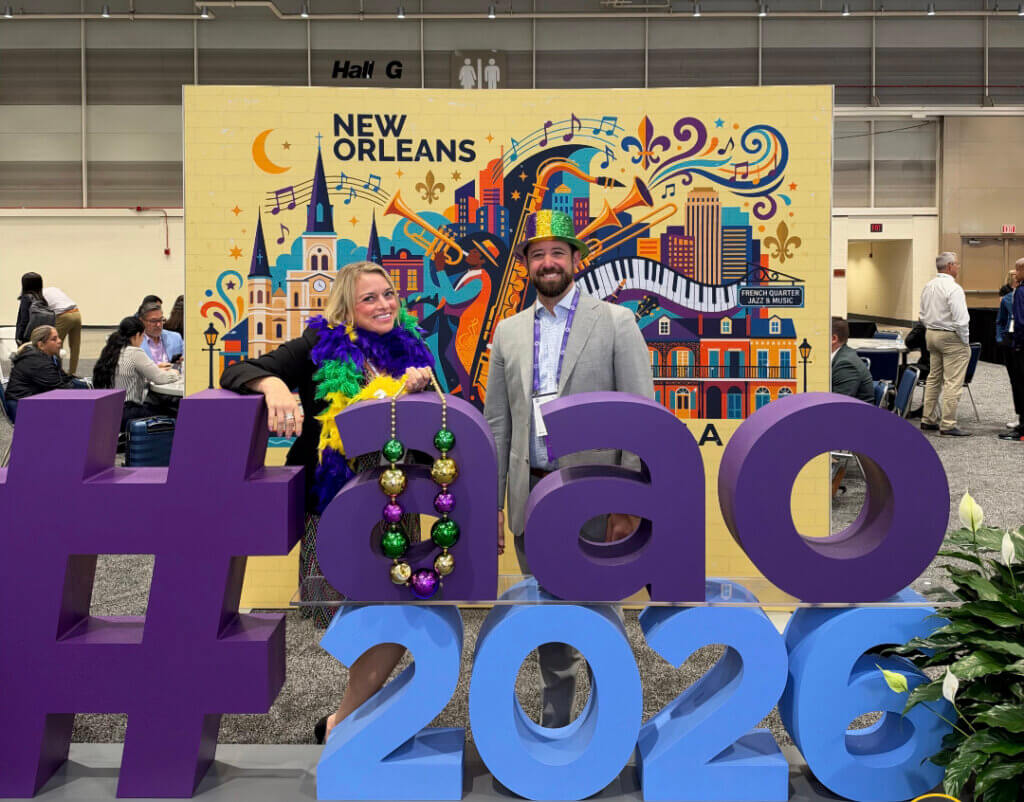
Connecting Vision Research and Advocacy at AAO 2026
Alliance for Vision Research was proud to join the ophthalmology community in New Orleans for AAO 2026, connecting with researchers, clinicians, industry leaders, advocates, and partners from across the vision community. Throughout the meeting, our team welcomed attendees at Booth 4819 to learn more about our work to protect and advance federal investment in vision … Continued