
Alliance for Vision Research Town Hall at ARVO 2026 Focuses on Federal Funding, Advocacy, and the Future of Vision Research
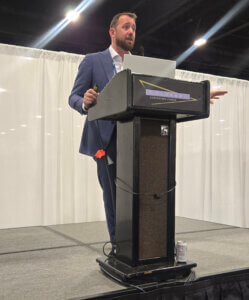
During the Association for Research in Vision and Ophthalmology Annual Meeting, Alliance for Vision Research hosted a town hall session led by Executive Director Dan Ignaszewski focused on the evolving federal funding landscape and the growing importance of advocacy within the vision research community.
The presentation addressed ongoing challenges facing biomedical research, including flat NIH funding, forward funding concerns, proposed indirect cost caps, centralized peer review changes, and continued threats to the independence of the National Eye Institute (NEI). Attendees also received an update on the Department of Defense Vision Research Program (VRP), which was restored by Congress in FY26 following significant cuts to the Congressionally Directed Medical Research Programs (CDMRP).
The session emphasized that while funding levels remain important, structural policy decisions are increasingly shaping the future of research, grant availability, and scientific innovation. Alliance for Vision Research outlined its key federal priorities, including maintaining NEI as an independent institute, increasing NEI funding to $1 billion, restoring forward funding to FY24 levels, and reinstating DoD Vision Research Program funding to at least $20 million.
A major focus of the town hall centered on improving how researchers communicate the value of their work to policymakers and the public. Through examples and advocacy messaging strategies, attendees were encouraged to shift from highly technical explanations toward more human-centered storytelling that emphasizes impact, relevance, and patient outcomes.
“Policymakers don’t fund data. They fund impact, relevance, and stories,” Ignaszewski explained during the session, emphasizing the need to bridge the “advocacy translation gap” between scientific discovery and public understanding.
The town hall concluded with a call to action encouraging researchers, clinicians, and advocates to engage more actively in federal advocacy efforts, communicate consistently, and help elevate vision research as a national priority.
Related News & Events
Legislative Update – September 2026
The Continuing Resolution Keeps Government Open Through December 11 President Trump signed the Continuing Appropriations and Extensions Act, 2027, into law on September 2. The continuing resolution (CR) keeps federal agencies operating through December 11, 2026, generally at current funding levels. It prevents an October 1 shutdown and gives Congress more time to negotiate full-year … Continued

Executive Director Update – September 2026
Over the past year, the vision research community has helped prevent some of the most damaging outcomes facing federal research. NEI remains an independent Institute. NIH funding has been largely preserved. The Department of Defense Vision Research Program (VRP) was restored. And, most recently, Congress delayed a sweeping OMB proposal that would fundamentally change how … Continued
Alliance for Vision Research Joins VHAC Stakeholder Meeting
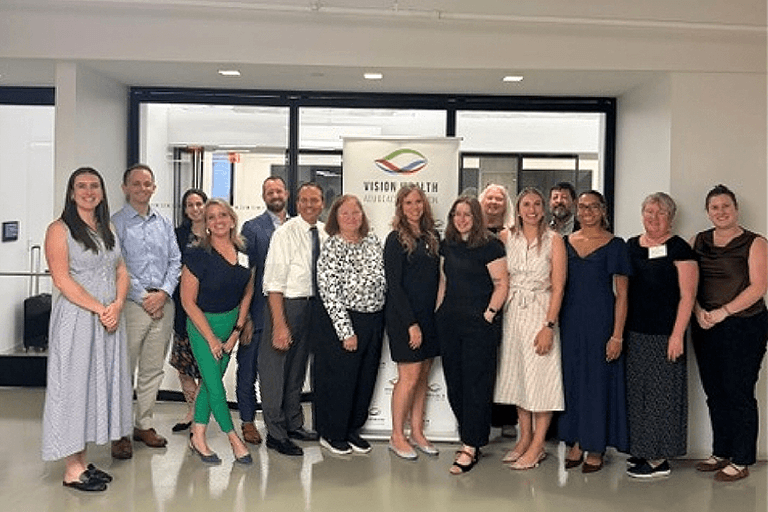
The Alliance for Vision Research joined fellow members of the Vision Health Advocacy Coalition (VHAC) this week for its Stakeholder Meeting, bringing together leaders from across the vision community to discuss shared advocacy priorities, challenges affecting access to care, and opportunities for greater collaboration in 2027. VHAC, a coalition of the Alliance for Patient Access, … Continued