
Legislative Update – November 2026
Legislative Update: A New Congress Brings Opportunities for Vision Research as Critical Funding Decisions Approach
The November congressional elections have significantly reshaped the federal policy landscape, creating new opportunities for biomedical research advocacy in 2027 while leaving several consequential funding and regulatory decisions unresolved.
With Democrats gaining control of both chambers of Congress in January, new leadership on key appropriations committees, and a substantial incoming class of lawmakers, the Alliance for Vision Research sees opportunities to build upon longstanding bipartisan support for the National Institutes of Health (NIH) and National Eye Institute (NEI).
However, Congress must first address a December 11 government funding deadline, while the research community continues to confront proposed federal grantmaking changes and uncertainty surrounding future research investments.
Election Results and New Congressional Leadership
The November 3 elections resulted in Democrats winning control of both the House of Representatives and Senate for the 120th Congress, which convenes January 3, 2027. In the Senate, Democrats are projected to hold a 56–44 majority following victories in nine Republican-held seats. In the House, Democrats secured a sizable majority, bringing significant changes to committee leadership and legislative priorities.
For the research community, some of the most consequential changes will occur on the House and Senate Appropriations Committees, which determine annual federal investment in NIH and NEI.
Several experienced lawmakers with established records of supporting biomedical research are positioned to assume leadership roles:
- Senator Patty Murray (D-WA) is expected to chair the Senate Appropriations Committee, replacing Senator Susan Collins (R-ME), who lost her reelection bid. Murray has consistently advocated for sustained NIH funding and congressional oversight of federal research agencies.
- Senator Tammy Baldwin (D-WI) is expected to chair the Senate Labor, Health and Human Services, and Education (LHHS) Appropriations Subcommittee, which oversees NIH funding. Baldwin has been a strong supporter of biomedical research investment.
- Senator Murkowski (R-AK) is expected to be ranking Republican on the Senate Appropriations Committee with the loss of Senator Olympia Snowe (R-ME), and she has long been a supporter of the NIH.
- Representative Rosa DeLauro (D-CT) is expected to chair the House Appropriations Committee and retain leadership of its LHHS Subcommittee. DeLauro has been particularly vocal in opposing reductions to NIH funding and advocating for stronger federal investment in research.
- Representative Tom Cole (R-OK) is expected to become the ranking Republican on House Appropriations, while Representative Robert Aderholt (R-AL) is expected to assume the ranking position on the House LHHS Subcommittee. Both have considerable appropriations experience, creating opportunities for continued bipartisan negotiations.
Additional committee assignments will be finalized as the new Congress organizes.
These leadership changes are encouraging, particularly given recent statements from Democratic appropriators about the need to return to a pattern of sustained annual NIH funding increases. Following years of inflationary pressures, administrative uncertainty, and disruptions to research funding, restoring predictable growth would provide needed stability to the biomedical research enterprise.
Nevertheless, significant challenges remain. Federal spending constraints, competing domestic priorities, and negotiations with the Trump administration could limit the magnitude of new investments. The Senate will also generally require bipartisan cooperation to advance appropriations legislation.
We will continue to work with members of both parties to promote NEI funding increases, preserve NEI’s independence within NIH, and reinforce the importance of supporting the nation’s vision research infrastructure.
December Funding Deadline: Another Continuing Resolution Appears Likely
The federal government is currently operating under a continuing resolution (CR) that maintains funding largely at FY2026 levels through December 11, 2026.
Congress must enact new appropriations or extend the CR before that deadline to avoid a partial government shutdown.
Although a shutdown remains possible, the more likely outcome appears to be passage of a relatively clean, short-term CR extending government funding into early 2027, potentially into February. Such an extension would give the incoming Congress an opportunity to participate in determining final FY2027 spending priorities rather than leaving those decisions entirely to the outgoing Congress.
This possibility is particularly important given the change in congressional control. Incoming Democratic appropriations leaders have expressed interest in revisiting federal spending priorities, including greater investment in biomedical research and additional congressional oversight of administration policies.
An extension into February could provide time to negotiate a broader bipartisan agreement that incorporates some of these priorities into funding for the remainder of FY2027.
However, delaying appropriations decisions is not without consequences. Extended CRs create uncertainty for NIH Institutes and Centers, complicate planning for new research awards, and can limit the ability to respond to emerging scientific opportunities.
A full-year CR would be particularly concerning because it could prevent needed increases for NEI and NIH, effectively continuing stagnant funding despite rising research costs.
We continue to urge Congress to avoid a shutdown, complete FY2027 appropriations as soon as practicable, and provide meaningful funding increases rather than relying on prolonged extensions of current funding.
Senate Releases FY2027 LHHS Proposal: Minor NIH Increase, but NEI Remains Flat
On November 16, Senate Appropriations Committee Chair Susan Collins and LHHS Subcommittee Chair Shelley Moore Capito released the Senate Republican proposal for FY2027 LHHS appropriations.
The legislation provides a useful starting point for negotiations, although it has not been approved by the full Senate Appropriations Committee.
The proposal includes approximately $49B for NIH, including $47.5B in base funding, an increase of $500 million compared with FY2026, while maintaining $1.5B for the Advanced Research Projects Agency for Health (ARPA-H).
While any proposed increase represents continued congressional recognition of the importance of biomedical research, the increase would remain below the level needed to restore sustained, inflation-adjusted growth.
For NEI, the Senate proposal recommends $896.549M, unchanged from its FY2026 enacted level.
The proposal maintains NEI as an independent NIH Institute and includes language encouraging additional research on Usher syndrome. Both are positive developments, but level funding would continue to constrain NEI’s ability to support new discoveries and expand research opportunities.
The Alliance continues to advocate for at least $1B in FY2027 NEI funding, reflecting the growing burden of eye disease and vision loss, the opportunities presented by emerging treatments and technologies, and the need for sustained investment in the next generation of vision scientists.
Important Protections for Research Grant Funding
The Senate explanatory statement also addresses NIH’s use of multiyear or forward funding for research project grants.
Under traditional NIH grantmaking practices, multiyear research awards typically receive their funding incrementally through annual appropriations. The administration has proposed fully obligating the outyear commitments of competing research project grants upfront.
This approach can significantly reduce the number of new grants NIH is able to award in a given fiscal year, particularly when available appropriations do not increase sufficiently to accommodate the additional upfront costs.
The Senate proposal explicitly expresses concern about the effects of this policy on grant application success rates and continues a general provision limiting funds that may be obligated for awards that fully fund future-year commitments. It also directs NIH to fund as many meritorious new awards as possible and report regularly on grantmaking activities.
This is a welcome acknowledgment of the concerns the Alliance and other scientific organizations have raised. However, the research community must continue advocating for a clear return to traditional annual funding practices and sufficient support for new and competing research awards.
Additional congressional oversight will be essential to ensure that appropriated funding translates into timely awards, predictable grant administration, and meaningful opportunities for researchers.
OMB Grantmaking Proposal Remains a Major Threat
One of the Alliance’s most pressing year-end priorities remains opposition to the Office of Management and Budget’s proposed revisions to the Uniform Guidance governing federal grants and cooperative agreements.
The proposal would fundamentally change the way federal research grants are reviewed, administered, and managed.
Among our principal concerns are provisions that could introduce additional political or administrative review before grant awards are issued, elevate broadly defined national-interest considerations over established scientific review processes, reduce opportunities to appeal funding decisions, and impose new restrictions on allowable grant expenditures.
Other provisions could create additional uncertainty surrounding indirect costs, subawards, scientific conferences, publications, and other activities essential to research.
Taken together, these changes threaten the stability and predictability of the federal research enterprise and could undermine the scientific merit-based processes that have helped make NIH a global leader in biomedical discovery.
Congressional Protections Must Be Extended
The current CR includes language preventing OMB from finalizing or implementing the proposed regulations through December 11.
That protection is temporary.
Importantly, the Senate’s newly released FY2027 LHHS proposal does not include an explicit continuation of the prohibition on OMB implementing the proposed rule. Without additional congressional action, the existing restriction could expire when the CR ends, potentially allowing the administration to move forward with the proposal.
The Alliance for Vision Research is urging Congress to extend these protections in any year-end CR and include a prohibition in final FY2027 appropriations legislation.
Looking toward 2027, the Allianxr will also advocate for the administration to formally withdraw or rescind the proposal rather than simply postpone implementation.
The incoming Congress provides an important opportunity to pursue a more durable resolution through appropriations, oversight, and direct engagement with OMB and federal research agencies.
Take Action: We encourage the vision research community to visit to use our Contact Congress link to join our advocacy campaign urging Congress to prevent implementation of the proposed OMB regulations.
Restoring Investment in the Defense Vision Research Program
We’re also continuing its advocacy for renewed funding of the Department of Defense’s (DoD) Vision Research Program (VRP), administered through the Congressionally Directed Medical Research Programs.
The VRP supports research addressing vision injuries and conditions affecting service members, veterans, and the broader American population, including traumatic eye injuries and vision loss associated with military service.
After receiving $20M in FY2024, the program was not funded in FY2025 before Congress restored $10M in FY2026. The FY2027 House proposal includes only $4M, substantially below its previous funding level.
The Alliance is urging Congress to restore the VRP to at least $10M in FY2027, with a longer-term goal of rebuilding support toward its previous $20M level.
The need for this research has not diminished. Advances in vision restoration, rehabilitation, diagnostics, and treatment of traumatic eye injuries have direct relevance to military readiness and quality of life for veterans, while frequently producing innovations that benefit civilian patients as well.
With a new Congress preparing to take office, we’ll continue working with defense appropriators from both parties to highlight the program’s value and the importance of reliable, sustained investment.
NIH Proposal on Annual Animal Research Reporting: Comments Due December 21
Beyond appropriations, the research community continues to face proposed changes to federal research oversight and administrative requirements.
NIH has issued a Request for Information, NOT-OD-27-001, seeking public input on the feasibility of requiring institutions to report annually the number of live vertebrate animals used in research covered by Public Health Service policy.
The proposal would expand reporting requirements to include species such as mice, rats, fish, and other animals not currently subject to equivalent federal annual counting requirements.
The Alliance recognizes the importance of responsible animal research, transparency, and strong animal welfare standards. However, any additional requirements must be evaluated carefully for their scientific utility, feasibility, cost, and potential administrative burden.
We are developing comments addressing the proposed requirements, particularly the need for meaningful and consistent data collection, clear definitions, appropriate reporting methods, and safeguards against diverting limited research resources toward unnecessary administrative activities.
Comments are due December 21, 2026. We encourage vision researchers, scientific institutions, and other stakeholders to review the proposal and submit feedback directly to NIH.
Looking Toward 2027: An Opportunity to Rebuild and Strengthen Support for Vision Research
The transition to the 120th Congress creates several potential paths toward a more favorable federal research environment.
First, incoming appropriations leaders may be more receptive to restoring annual increases for NIH and providing additional support for Institutes and Centers that have faced years of constrained purchasing power.
Second, the new Congress could strengthen oversight of NIH research funding and administration, including forward funding practices, grant delays, staffing challenges, peer review, and implementation of proposed regulatory changes.
Third, congressional leadership could pursue legislative and appropriations provisions that preserve scientific merit, protect the independence of NIH Institutes and Centers, and prevent implementation of policies that disrupt the research enterprise.
Finally, the substantial incoming freshman class presents an important opportunity for the vision research community to establish relationships with new policymakers and communicate the value of NEI-supported research.
We plan to make congressional outreach, education, and engagement a major priority in 2027, including opportunities for researchers, clinicians, patients, and advocates to share firsthand examples of how vision research changes lives.
These opportunities are promising, but they will require sustained advocacy and bipartisan collaboration. A change in congressional leadership does not eliminate federal budget constraints or guarantee that research funding increases and policy protections will become law.
Take Action Before Congress Adjourns and Again in January
Alliance for Vision Research encourages members of the vision research community to continue to contact their elected officials before the end of 2026 and reconnect with congressional offices when the new Congress convenes.
Our immediate priorities continue to include:
- Increase NEI funding to at least $1B in FY2027, while maintaining NEI’s independence within NIH and promoting sustained annual increases across biomedical research.
- Prevent implementation of the OMB Uniform Guidance proposal, extending the current congressional prohibition and urging the administration to withdraw the proposed regulations.
- Restore the DoD Vision Research Program to at least $10M, supporting military-relevant eye injury and vision restoration research.
- Protect merit-based research funding and traditional NIH grantmaking practices, including clear limits on forward funding and support for new and competing awards.
- Provide feedback on NIH’s proposed animal reporting requirements before the December 21 deadline, and help educate incoming lawmakers about the importance of vision research.
The coming months will continue to be consequential for federal research policy, but they also offer opportunities to strengthen the foundation for scientific progress.
Through continued engagement, constructive bipartisan advocacy, and the collective voice of the vision research community, we can help ensure that federal policies and investments reflect the importance of preventing vision loss, restoring sight, and advancing treatments for millions of Americans.
Related News & Events

Executive Director Update – November 2026
A Season of Gratitude, Optimism, and Renewed Commitment to Vision Research As we approach Thanksgiving and reflect on the past year, I want to express my gratitude to all our partners and stakeholders in the vision research and patient advocacy communities for your continued engagement, partnership, and commitment to advancing research that protects sight and … Continued
Celebrating Vision Research with The Glaucoma Foundation
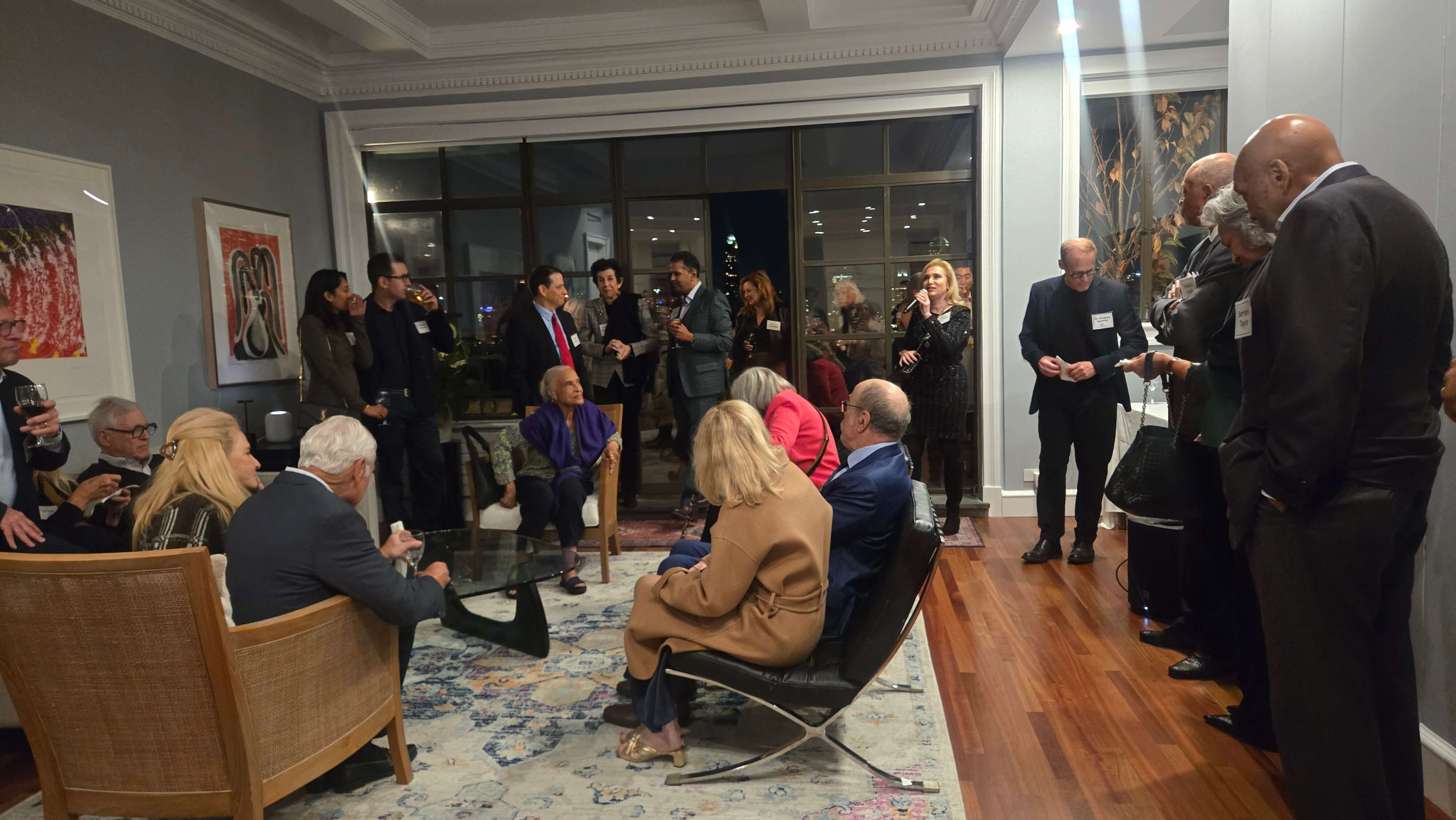
Alliance for Vision Research was proud to join The Glaucoma Foundation for its Fall Social, an evening celebrating the researchers, advocates and leaders working to advance glaucoma research and improve the lives of people affected by vision loss. The gathering highlighted The Glaucoma Foundation’s longstanding commitment to accelerating innovative research and supporting scientific discoveries that … Continued
Our Executive Director Recognized as Featured Advocate
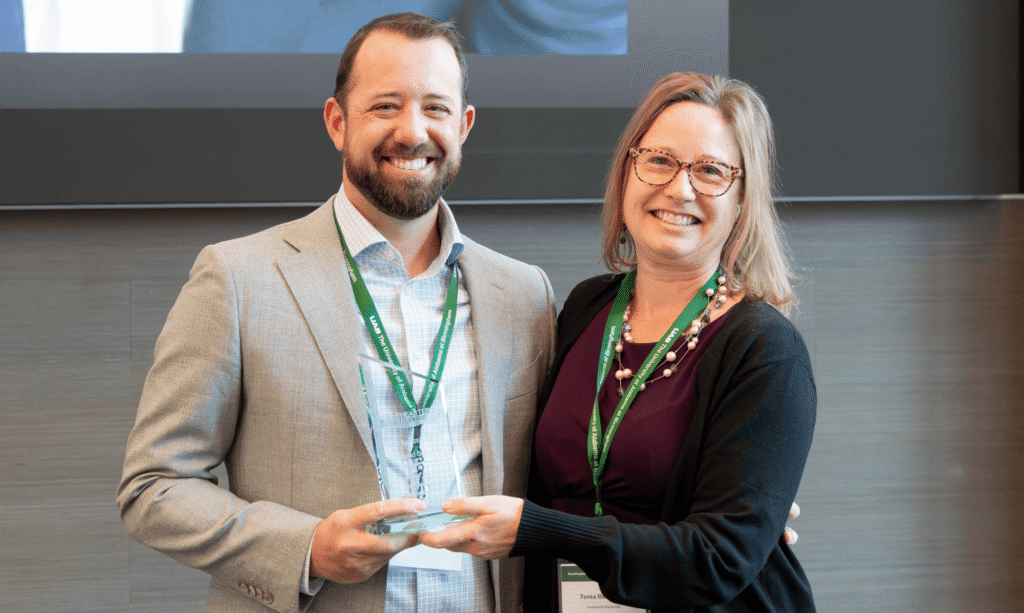
Dan Ignaszewski Recognized as Featured Advocate at SEVRC Alliance for Vision Research Executive Director Dan Ignaszewski was recognized as the Featured Advocate at the 2026 Southeastern Vision Research Conference (SEVRC), held November 9–10 at the University of Alabama at Birmingham (UAB). The biennial conference brought together vision scientists from UAB, Emory University and Vanderbilt University … Continued