
Executive Director Update – July 2026
As we move through the second half of the year, I remain encouraged, not because the challenges facing the vision research community have become any smaller, but because our community has continued to show up and respond.
Over the past several months, we have faced an unprecedented number of federal policy proposals with the potential to reshape the biomedical research landscape. From annual appropriations and NIH grant delays to proposed changes in federal grantmaking, there has been no shortage of uncertainty. Yet even with these challenges, one thing has remained clear: the vision research community is engaged, informed, and willing to speak with one voice when it matters most.
Perhaps nowhere was that more evident than in the response to the Office of Management and Budget’s proposed changes to the Uniform Guidance governing federal research grants this summer. Alliance for Vision Research submitted detailed comments outlining our concerns about the proposal’s potential impact on scientific peer review, research independence, collaboration, and the predictability of federal research funding, and shared resources for our partners to submit comments as well. Just as importantly, many of our community stakeholders submitted their own thoughtful comments. That broad participation sends an important message that the vision research community is paying attention and is committed to protecting the integrity of the federal research enterprise.
Thank you to everyone (individuals, organizations, and institutions) who took the time to engage. Your voices matter.
Our advocacy efforts have remained focused on securing robust funding for both the National Eye Institute and the Department of Defense Vision Research Program. While we appreciate that the House rejected some of the Administration’s most significant proposed cuts to NIH and maintained funding for NEI, level funding is not enough to keep pace with inflation or the tremendous scientific opportunities before us. At the same time, the House proposal to reduce the Vision Research Program from $10 million to just $4 million is deeply concerning. The VRP has consistently supported innovative research benefiting both military personnel and civilians living with vision-threatening conditions, and we will continue working with congressional offices to restore funding as the appropriations process moves forward.
Advocacy, however, cannot happen only in Washington.
This year presents an especially important opportunity to educate policymakers about the value of vision research. Every member of the House of Representatives and one-third of the Senate will stand for election this November. Whether your current Member of Congress is seeking reelection or your district is welcoming new candidates, they all share one thing in common: they want to hear from the people they represent and who might vote for them.
There is no better way to demonstrate the impact of federal research investments than by inviting elected officials and candidates into your laboratories, clinics, research centers, and universities. Show them your science. Introduce them to trainees and early-career investigators. Explain how NIH and NEI funding support jobs, drives innovation, strengthens local economies, and, most importantly, improves the lives of patients and families affected by vision loss. These visits create lasting impressions that no briefing paper or fact sheet can match.
Alliance for Vision Research is happy to help support you and your institution with these opportunities, provide background materials, share messaging, and more. If your institution is interested in hosting a visit, please don’t hesitate to reach out.
While much of our attention understandably focuses on today’s policy challenges, we are equally committed to investing in tomorrow’s scientific leaders. I am excited to share that we are once again welcoming a record number of participants to our Emerging Vision Scientist Program, which has doubled participation since just four years ago. Each year this program continues to grow, connecting early-career investigators with congressional offices, federal agencies, patient advocates, and leaders across the vision community. It is inspiring to see so many talented young scientists eager not only to pursue outstanding research but also to become effective advocates for science and for patients. Their enthusiasm reminds us why our work matters and gives me tremendous confidence in the future.
Looking ahead, the coming months will be critical. Congress will continue negotiating FY27 appropriations, the Senate will release its funding proposals, decisions will be made regarding the future of the OMB grantmaking proposal, and NIH will continue working through ongoing grant awards. The Alliance for Vision Research will remain actively engaged every step of the way, working with congressional leaders, federal agencies, coalition partners, and all of you to advocate for strong, stable, and predictable support for vision research.
As always, thank you for your continued partnership, your engagement, and your willingness to advocate for the science that is improving and saving sight. Together, we have built a strong and respected voice for the vision research community. With your continued involvement and engagement through the fall, that voice will only become stronger.
Sincerely,
 Dan Ignaszewski
Executive Director
Alliance for Vision Research
Related News & Events
Legislative Update – September 2026
The Continuing Resolution Keeps Government Open Through December 11 President Trump signed the Continuing Appropriations and Extensions Act, 2027, into law on September 2. The continuing resolution (CR) keeps federal agencies operating through December 11, 2026, generally at current funding levels. It prevents an October 1 shutdown and gives Congress more time to negotiate full-year … Continued

Executive Director Update – September 2026
Over the past year, the vision research community has helped prevent some of the most damaging outcomes facing federal research. NEI remains an independent Institute. NIH funding has been largely preserved. The Department of Defense Vision Research Program (VRP) was restored. And, most recently, Congress delayed a sweeping OMB proposal that would fundamentally change how … Continued
Alliance for Vision Research Joins VHAC Stakeholder Meeting
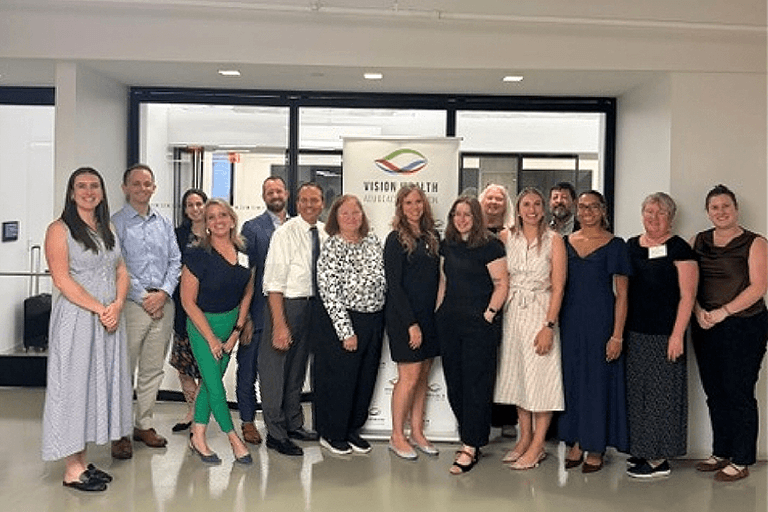
The Alliance for Vision Research joined fellow members of the Vision Health Advocacy Coalition (VHAC) this week for its Stakeholder Meeting, bringing together leaders from across the vision community to discuss shared advocacy priorities, challenges affecting access to care, and opportunities for greater collaboration in 2027. VHAC, a coalition of the Alliance for Patient Access, … Continued