
DoD Vision Research Program
Advancing Vision Research for Service Members and Veterans
Alliance for Vision Research played a critical role in establishing and advancing the Department of Defense Vision Research Program, ensuring sustained investment in research that addresses vision-threatening injuries affecting Service Members and Veterans.
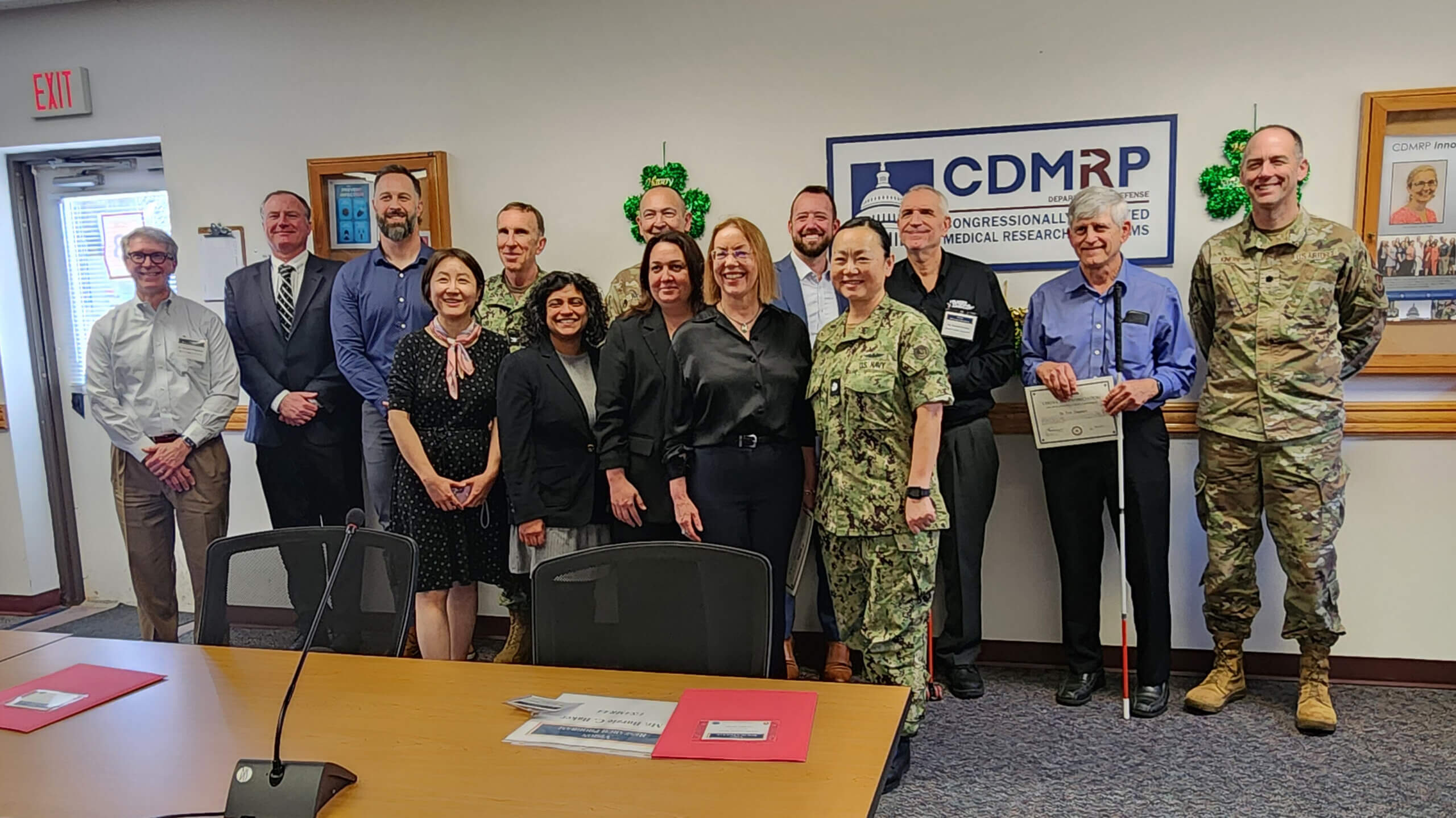
What is the Vision Research Program (VRP)?
The Department of Defense’s Congressionally Directed Medical Research Programs (CDMRP) Vision Research Program (VRP) is a competitive, peer-reviewed federal funding program supporting innovative, high-impact vision research aligned with military and veteran health needs.
The program focuses on understanding, preventing, and treating vision-threatening injuries caused by combat-related exposures, including blast trauma, burns, and other battlefield hazards.
Driving Investment in Vision Research
Alliance for Vision Research has been instrumental in advocating for the creation, funding, and continuation of the Vision Research Program.
Through coordinated advocacy, congressional engagement, and coalition-building, Alliance for Vision Research helped:
-
Elevate awareness of combat-related vision injuries
Combat ocular trauma has accounted for up to 13% of injuries in recent conflicts, underscoring the need for targeted research and prevention strategies. -
Educate policymakers on the need for targeted research funding
Alliance for Vision Research engages dozens of congressional offices annually through briefings and meetings to translate vision science into policy priorities. -
Secure initial and sustained appropriations for the program
Vision Research Program funding grew from $4 million at inception to $20 million annually at its peak—reflecting sustained advocacy and demonstrated impact. -
Mobilize the vision community to support continued investment
Alliance for Vision Research unites nearly 50 organizations across research, clinical care, patient advocacy, and industry to amplify a coordinated national voice.
The military-relevance case
Why this Research is Critical for Military Readiness
On the battlefield, losing vision doesn’t just end a mission—it reshapes a life forever. Vision injuries can lead to permanent vision loss or blindness, reduced operational readiness, lifelong rehabilitation needs, abd mental health challenges, including depression or anxiety.
TBI
Cases of traumatic brain injury (TBI) have been reported in military populations—many with associated vision dysfunction.
Visual Symptoms
Up to 75% of TBI patients experience visual symptoms affecting daily function and readiness.